Mobiles Roulette für iOS für PC: Alles, was Sie wissen müssen

Mobiles Roulette für iOS für PC ist eine beliebte Variante des klassischen Casinospiels, das es Spielern ermöglicht, Roulette auf ihren mobilen Geräten oder Desktop-Computern zu spielen. In diesem Artikel werden wir alle wichtigen Informationen zu Mobiles Roulette für iOS für PC behandeln, einschließlich der besten Online-Casinos, in denen Sie spielen 자세히 보기

Roulette Online USA Fast Payouts: A Comprehensive Guide

When it comes to playing roulette online in the USA, fast payouts are one of the key factors that players look for. In this article, we will explore everything you need to know about roulette online USA fast payouts, including gameplay, payouts, house edge, tips, and the best online casinos to play at. With over 15 years of experience playing online 자세히 보기

Gestión Inteligente del Presupuesto en Casinos Online: Cómo los Bonus pueden ser tus Aliados Responsables

El auge de los casinos online ha transformado la manera en que los jugadores españoles acceden a juegos de slots, ruleta y poker. La facilidad de registro, los pagos instantáneos y la disponibilidad 24 horas hacen que la experiencia sea tan atractiva como arriesgada. Al mismo tiempo, los organismos reguladores y los propios operadores han intensificado la conversación sobre el juego responsable, impulsando herramientas que ayuden a los usuarios a mantener el control financiero mientras disfrutan de la diversión.

Para quienes buscan planificar su futuro financiero, recursos como https://www.jubilaciondefuturo.es/ ofrecen valiosas guías sobre ahorro y gestión de riesgos. En este contexto, los sitios especializados en jubilación no están directamente vinculados al juego, pero sirven como recordatorio de la importancia de equilibrar ocio y metas a largo plazo.

Este artículo pretende ofrecer una visión profunda de cómo combinar bonos y herramientas de control para jugar de forma segura y rentable. Exploraremos desde los conceptos básicos de bankroll inteligente hasta las tendencias emergentes de IA que personalizan los incentivos, siempre con un enfoque en la responsabilidad del jugador.

1. ¿Qué son las herramientas de bankroll inteligente y por qué importan?

El término “bankroll” se refiere al capital destinado exclusivamente a la actividad de juego. Una “herramienta de bankroll inteligente” es cualquier funcionalidad que permite al jugador monitorizar, limitar y optimizar ese capital en tiempo real. Entre las más habituales se encuentran los límites de depósito configurables, alertas de gasto y paneles de seguimiento que muestran ganancias y pérdidas por sesión.

Estas funcionalidades reducen la exposición a conductas de riesgo al imponer barreras automáticas antes de que el jugador pueda sobrepasar sus propios umbrales. Por ejemplo, un límite diario de 50 €, una alerta cuando el gasto supera el 80 % del bankroll y un reporte semanal que desglosa el retorno de inversión (RTP) de cada juego. Al proporcionar datos claros, el jugador puede decidir si seguir jugando o detenerse antes de que la volatilidad del juego le cause un desequilibrio financiero.

El impacto es doble: por un lado, se previene el agotamiento del presupuesto y, por otro, se mejora la experiencia al eliminar la incertidumbre sobre cuánto se está gastando. En los mejores casinos online España, estas herramientas forman parte del paquete de juego responsable y son un requisito cada vez más frecuente para la obtención de licencias.

2. El papel de los bonos en la gestión del presupuesto

Los bonos son la principal arma de atracción de los operadores. Los más comunes son:

  • Welcome bonus: suele ser un 100 % del primer depósito, hasta 200 €.
  • Bono de recarga: 50 % extra en depósitos posteriores, a menudo limitado a 100 €.
  • Sin depósito: 10 € gratuitos para probar el casino sin arriesgar dinero propio.
  • Cash‑back: devolución del 10 % de las pérdidas netas cada semana.

Cuando se usan con prudencia, los bonos amplían el bankroll sin requerir una inversión adicional. Un jugador que deposita 100 € y recibe un welcome bonus de 100 € duplica su capital inicial, lo que le permite jugar más manos o probar juegos de mayor volatilidad sin comprometer su propio dinero.

Sin embargo, los bonos también conllevan riesgos. Los requisitos de apuesta (wagering) pueden exigir que el jugador apueste 30 veces el valor del bono antes de poder retirar ganancias, lo que incrementa la exposición al riesgo. Además, la expiración suele ser de 30 días; si no se cumplen los requisitos a tiempo, el bono se pierde. Por ello, la gestión inteligente implica leer los T&C, calcular el ROI esperado y decidir si el bono realmente aporta valor al bankroll.

3. Configuración de límites de depósito usando los bonos como “colchón”

Una estrategia eficaz consiste en fijar un límite de depósito que incluya el valor del bono como margen de seguridad. Supongamos que un jugador decide no gastar más de 150 € en una semana. Si recibe un bono de 50 € sin depósito, su límite máximo de depósito sería 100 €, ya que el “colchón” cubre el resto del presupuesto.

Ejemplo práctico

  1. Presupuesto semanal: 150 €.
  2. Bono sin depósito: 50 €.
  3. Límite de depósito diario: (150 € – 50 €) ÷ 7 ≈ 14 € por día.

Muchos casinos ofrecen la opción de establecer límites automáticos en la sección de “responsabilidad”. Al activar la herramienta, el sistema bloquea cualquier intento de depósito que supere el umbral definido, evitando que el jugador se exceda sin darse cuenta. Esta automatización es esencial para quienes prefieren una gestión pasiva del bankroll.

4. Alertas y notificaciones: mantén el control en tiempo real

Las alertas son la columna vertebral del control en tiempo real. Se clasifican en tres grupos principales:

  • Gasto: notifica cuando se alcanza el 50 %, 75 % y 100 % del límite diario.
  • Tiempo de juego: avisa al cabo de 30 min, 1 h o 2 h de sesión continua.
  • Pérdida de bonos: alerta cuando el saldo del bono está a punto de expirar o no se cumplen los requisitos de apuesta.

Los beneficios de recibir notificaciones push o por email son evidentes: el jugador puede interrumpir la sesión antes de que el gasto se vuelva insostenible y planificar mejor sus próximas jugadas.

Plataforma Tipo de alerta Canal Personalización
Casino A Gasto, tiempo Push, SMS Límites ajustables por día/semana
Casino B Bono, tiempo Email Plantillas de alerta predefinidas
Casino C Gasto, bono App interna Configuración avanzada de umbrales

Los mejores casinos online España suelen ofrecer al menos dos canales de notificación, lo que permite al jugador elegir el que mejor se adapte a su rutina.

5. Análisis de historial de juego: aprende de tus bonos pasados

Revisar el historial de bonos y apuestas es fundamental para detectar patrones de comportamiento. La mayoría de los operadores incluyen un “dashboard” donde se visualizan:

  • Fecha de activación del bono.
  • Requisitos de apuesta completados vs. pendientes.
  • ROI del bono (ganancias netas divididas por el total apostado).

Una métrica útil es el % de cumplimiento, que indica qué porcentaje del wagering se ha completado. Si un jugador observa que solo ha alcanzado el 40 % después de dos semanas, puede decidir cerrar la cuenta o buscar un bono con requisitos más bajos.

Herramientas de terceros, como BetTracker o CasinoStats, permiten exportar los datos a CSV y crear gráficos personalizados. Al comparar varios bonos, el jugador puede identificar cuáles ofrecen mejor retorno y cuáles son más costosos en términos de tiempo de juego.

6. Integración de herramientas externas de gestión financiera

Aplicaciones de presupuesto personal como Mint, YNAB o Fintonic pueden sincronizarse con las cuentas bancarias y, mediante importación manual, con los extractos de casino. El proceso típico es:

  1. Descargar el historial de transacciones del casino (formato CSV).
  2. Importar el archivo a la app de presupuesto.
  3. Categorizar las entradas como “juego – bonos” o “juego – pérdidas”.

Una vez integrados, los usuarios pueden visualizar el impacto de los bonos en su panorama financiero global. Por ejemplo, si el bankroll de juego representa el 5 % del presupuesto mensual, la app mostrará cómo los bonos reducen esa proporción a 3 %, liberando fondos para ahorro o inversión.

Esta visión holística ayuda a evitar que el juego se convierta en una carga financiera inesperada y permite planificar metas a corto y largo plazo, como la creación de un fondo de emergencia o la contribución a una cuenta de jubilación.

7. Buenas prácticas para aprovechar los bonos sin comprometer la responsabilidad

  • Lee siempre los términos y condiciones; presta especial atención a los requisitos de apuesta y fechas de expiración.
  • Establece una fecha límite interna para usar el bono, preferiblemente antes de que se acerque la expiración oficial.
  • No persigas pérdidas: si el bankroll se reduce, cierra la sesión y revisa el historial antes de volver a jugar.

Caso de estudio
María, jugadora de slots en un casino online España, recibió un bono de 50 € sin depósito. Aplicó un límite de gasto semanal de 100 €, usando el bono como “colchón”. Tras tres semanas, su ROI del bono fue del 120 %, y logró mantener su bankroll original sin exceder el límite.

La auto‑exclusión y los límites auto‑impuestos son complementos esenciales. Muchos operadores permiten bloquear el acceso durante 24 h, 7 días o incluso períodos más largos, lo que brinda una herramienta de “reset” cuando la emoción del juego amenaza la disciplina financiera.

8. Futuro de la gestión de bankroll: IA y personalización de bonos

La inteligencia artificial está comenzando a transformar la gestión de bankroll. Algoritmos de aprendizaje automático analizan el comportamiento del jugador y ajustan automáticamente los límites de depósito según la volatilidad reciente y el historial de pérdidas.

Además, los operadores están experimentando con bonos personalizados: si un jugador muestra una alta tasa de aciertos en juegos de baja volatilidad, el sistema le ofrecerá un bono de cash‑back del 15 % en slots de alta volatilidad, incentivando la diversificación sin aumentar el riesgo.

Estas innovaciones plantean preguntas éticas. La personalización debe equilibrarse con la protección del jugador, evitando que la IA sugiera apuestas que maximicen el beneficio del operador a costa del bienestar del usuario. Los reguladores europeos están trabajando en directrices que obliguen a los casinos a presentar informes de IA transparente y a ofrecer siempre la opción de desactivar ajustes automáticos.

Conclusión

Combinar bonos con herramientas de bankroll inteligente permite a los jugadores de casinos online España disfrutar de la emoción del juego sin comprometer su salud financiera. Establecer límites, activar alertas, analizar el historial y, cuando sea posible, integrar apps de presupuesto, crea una red de seguridad que convierte los incentivos en verdaderos aliados.

Te invitamos a probar al menos una herramienta de control—como el límite de depósito diario o una alerta de gasto—y a leer siempre los términos de los bonos antes de aceptarlos. La diversión y la responsabilidad pueden coexistir, y con la planificación adecuada, tus sesiones de juego pueden ser tanto rentables como seguras.

Roulette um echtes Geld risikofrei: Tipps, Tricks und Empfehlungen für Online-Spieler

Als erfahrener Copywriter und passionierter Online-Roulette-Spieler mit 15 Jahren Erfahrung, freue ich mich, Ihnen heute einen Expertenartikel über Roulette um echtes Geld risikofrei präsentieren zu können. In diesem Artikel werden wir uns mit den verschiedenen Aspekten dieses spannenden Spiels befassen, darunter Gameplay, Auszahlungen, Hausvorteil, 자세히 보기

Play Live Roulette USA for Tablet: Everything You Need to Know

Looking to play live roulette in the USA on your tablet? Look no further! In this comprehensive guide, we will explore everything you need to know about playing live roulette on your tablet, including the best online casinos, gameplay tips, payouts, and more.

Gameplay and Features

Playing live roulette on your tablet offers an immersive and interactive experience that brings the excitement of a land-based casino directly to your fingertips. You can interact with real dealers in real-time, place bets, and watch the wheel spin all from the comfort of your own home.

Some key features of playing live roulette on your tablet include:

  • High-quality video streaming for a seamless gaming experience
  • Various camera angles to choose from for different perspectives
  • Live chat functionality to communicate with dealers and other players
  • Ability to customize settings for a personalized gaming experience

Advantages and Disadvantages

When it comes to playing live roulette on your tablet, there are both advantages and disadvantages to consider. Some of the pros include:

  • Convenience of playing from anywhere at any time
  • Interacting with real dealers for a more authentic experience
  • Wide range of betting options to suit all preferences

However, there are also some drawbacks to playing live roulette on your tablet, such as:

  • Potential for connectivity issues affecting gameplay
  • Limited availability of tables during peak hours
  • Screen size may be smaller compared to desktop computers
Players House
2.70% 5.26%

Payouts

When it comes to payouts in live roulette, the amount you can win depends on the type of bet you place. Some common payout rates include:

  • Straight up (single number): 35:1
  • Split (two adjacent numbers): 17:1
  • Even/Odd or Red/Black: 1:1

Where to Play

Looking to play live roulette on your tablet? Check out these top online casinos that offer live roulette for players in the USA:

Casino Device Compatibility Bonuses
Golden Nugget Tablet, Mobile, Desktop 100% Deposit Match up to $1000
BetMGM Tablet, Mobile, Desktop $25 Free Play + 100% Deposit Match up to $1000

Tips for Playing

Want to improve your chances of winning at live roulette on your tablet? Here are some tips to keep in mind:

  • Stick to even money bets to increase your chances of winning
  • Practice proper bankroll management to avoid overspending
  • Take advantage of bonuses and french roulette live promotions offered by online casinos

Checking Fairness

Concerned about the fairness of live roulette on your tablet? Here are some ways to ensure a fair gaming experience:

  1. Choose reputable online casinos with a valid gaming license
  2. Check for third-party audits and certifications for fairness
  3. Contact customer support if you encounter any issues

With these tips and recommendations, you’ll be ready to enjoy playing live roulette on your tablet like a pro. Good luck and happy spinning!

Roulette for Beginners Australia for Mobile: A Comprehensive Guide

Are you new to the world of online roulette and looking to learn the ropes on your mobile device? Look no further! In this expert article, we will provide you with all the essential information you need to know about playing roulette for beginners in Australia on your mobile.

The Gameplay and Features of Roulette for Beginners Australia for Mobile

Roulette is a classic casino game that has been enjoyed by players for centuries. The https://curiesteem.com game involves placing bets on where a ball will land on a spinning wheel divided into numbered pockets. In the online version of the game, players can enjoy the same thrill and excitement of roulette on their mobile devices.

Some key features of roulette for beginners in Australia on mobile include:

  • Easy-to-navigate interface for seamless gameplay
  • Multiple betting options to cater to different playing styles
  • Realistic graphics and sound effects to enhance the gaming experience

Advantages and Disadvantages of Roulette for Beginners Australia for Mobile

Just like any other casino game, roulette for beginners in Australia on mobile comes with its own set of pros and cons. Here are some advantages and disadvantages to consider:

Pros Cons
Convenient and accessible gameplay on mobile devices Limited social interaction compared to playing at a physical casino
Ability to play anytime, anywhere Potential for distractions while playing on mobile

House Edge in Roulette for Beginners Australia for Mobile

The house edge in roulette refers to the advantage that the casino has over the players. In general, European roulette has a lower house edge compared to American roulette, making it a preferred choice for many players.

For beginners in Australia playing on mobile, it is essential to understand the house edge and how it can affect your chances of winning. By choosing the right variant of roulette and employing a strategic betting approach, you can increase your odds of success.

Payouts in Roulette for Beginners Australia for Mobile

Roulette offers a variety of betting options, each with its own payout potential. Some common bets include straight bets (betting on a single number), red/black bets, and even/odd bets. Understanding the payouts for each type of bet is crucial for maximizing your winnings in roulette for beginners in Australia on mobile.

Game Tips for Beginners

Here are some valuable tips to help beginners get started with playing roulette on their mobile devices:

  • Start with even money bets to increase your chances of winning
  • Set a budget and stick to it to avoid overspending
  • Practice good bankroll management to make your funds last longer

Online Casinos Offering Roulette for Beginners Australia for Mobile

When it comes to playing roulette on your mobile device in Australia, there are several reputable online casinos to choose from. Some of the top casinos offering roulette for beginners in Australia on mobile include:

Casino Name Mobile Compatibility Game Variety
Crown Casino Android, iOS Multiple roulette variants
Star Casino Android, iOS Live dealer roulette options

Checking the Fairness of the Game

It is crucial for players to verify the fairness of the game when playing roulette for beginners in Australia on mobile. Here are some tips to ensure a fair gaming experience:

  1. Choose reputable and licensed online casinos
  2. Check for independent audits and certifications
  3. Read player reviews and testimonials for feedback

Bonuses and Promotions

Many online casinos offer bonuses and promotions to entice players to try their games, including roulette for beginners in Australia on mobile. By taking advantage of these offers, players can boost their bankroll and extend their playing time.

Whether it’s free spins, deposit bonuses, or loyalty rewards, there are plenty of opportunities to enhance your roulette experience and increase your chances of winning.

Does transaction simulation actually stop blind signing? A close look at Rabby Wallet extension

What does it mean, in practice, to “simulate” a transaction before you sign it—and can that simulation solve the most dangerous failure modes experienced by DeFi users? That question matters because the worst losses in wallet security don’t come from weak passwords; they come from decisions made in a few seconds while clicking “Confirm.” Rabby Wallet positions itself squarely at that friction point: a non-custodial, multi‑chain browser extension (with mobile and desktop clients) that runs pre‑transaction simulations and risk scans. For US-based DeFi power users—traders, liquidity providers, and smart‑contract integrators—the difference between a real preview and a cosmetic label is the difference between recovering funds and writing off a hack.

In this piece I unpack how Rabby’s simulation and risk‑scanning features work at the mechanism level, where they succeed, and where they leave gaps. I correct three common misconceptions about transaction simulation, show practical decision heuristics you can use when the wallet reports a warning, and outline the signals to watch next as multi‑chain wallets evolve. The goal isn’t to endorse a product but to sharpen a mental model you can reuse across wallets and workflows.

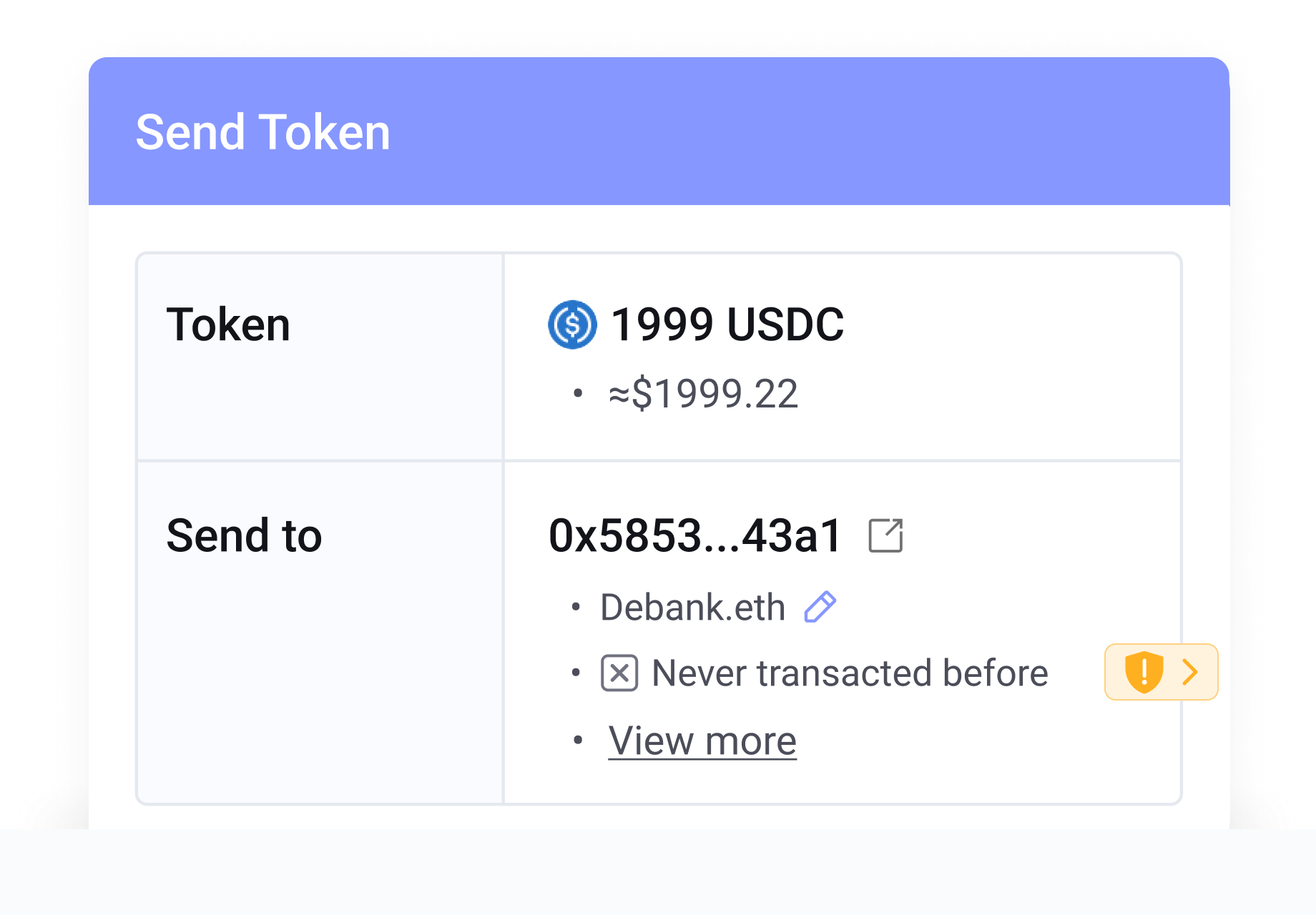
Screenshot-style illustration showing Rabby Wallet's security check screen with pre-transaction risk indicators and estimated token balance changes

How Rabby’s transaction simulation works — mechanism, not magic

At a mechanistic level, Rabby prevents blind signing by executing a dry‑run of the proposed transaction against a local or remote execution engine before presenting a human‑readable result. That dry‑run computes two classes of outputs: estimated token and balance deltas (what tokens you will gain or lose, and fees you’ll pay) and security flags raised by a built‑in threat engine. The simulation reconstructs the transaction environment—the target contract, calldata, current on‑chain state such as allowances and liquidity pool balances—and evaluates the net effects as if the transaction were mined right now.

Why does this matter? Because a simulated balance delta is concrete: it tells you “you will lose X tokens, gain Y tokens, and pay Z gas” rather than the usual, opaque “approve” or “swap” label. That concreteness converts a mental leap into a verifiable check. The companion risk scan looks up contract history (has this contract been associated with known exploits?), checks for unusual approval patterns (infinite allowances, approvals to newly created contracts), and flags addresses that do not appear to exist (a common typo trap). Put together, simulation + risk scanning narrows the gap between what the user thinks they are signing and what the bytecode will actually do.

Three misconceptions — and the corrected view

Misconception 1: “If a wallet simulates, I’m safe from all scams.” Correction: simulation reduces surface risk but does not eliminate it. Simulations are as reliable as the data and assumptions they use. If a simulation relies on market oracles that are manipulable on a particular chain, or if the target contract contains dynamic code paths that depend on future on‑chain events, the preview can be misleading. In short: simulation is a strong diagnostic, not a forensic guarantee.

Misconception 2: “Simulation stops every approval exploit.” Correction: Rabby’s simulation can show the balance changes and call out suspicious approvals, and it includes a native revocation tool to cancel approvals afterward. But many exploits begin with legitimate‑looking approvals that are later misused off‑chain or by multisig‑compromised parties. Simulation helps you spot exceptionally risky approvals (like full allowance grants) and should change your behavior (prefer limited allowances, use spending caps), but it cannot prevent downstream abuses by actors who later gain signing power.

Misconception 3: “Automatic network switching prevents user errors.” Correction: Rabby’s automatic network switching removes a common manual step that causes transactions to fail or be sent to the wrong chain. Yet automatic switching can also produce a false sense of passivity: users may stop checking network context and accept prompts reflexively. Automation reduces one class of human error but introduces a new behavioral risk (blind trust in the switch), so combine automation with habits: confirm the chain, confirm the counterparty, and treat a simulation as an additional filter, not a final seal of approval.

Where Rabby stands in the current wallet landscape — capabilities and limits

Rabby is built by DeBank as a non‑custodial wallet and distinguishes itself with simulation-first UX, multi‑chain support (over 90 EVM‑compatible chains), hardware wallet compatibility (Ledger, Trezor, Keystone, and others), and enterprise integrations (Gnosis Safe, Fireblocks). For US power users managing complex DeFi positions across Arbitrum, Optimism, Polygon, and Ethereum mainnet, these are practical strengths: hardware signers for custody, automatic network switching for dApp workflows, and a portfolio dashboard that aggregates positions across chains.

Still, be explicit about the limits. Rabby does not offer a built‑in fiat on‑ramp or native in‑wallet staking at present—so if you need to buy crypto or stake tokens without leaving the wallet, you’ll handle those steps externally. The wallet is open source under MIT, which helps independent audits, but past incidents matter: a Rabby‑associated swap contract was exploited in 2022, prompting contract freezing, partial compensation, and tighter audits. That episode demonstrates both the value of incident response and the immutable reality that smart contract composition creates systemic attack surfaces that even conscientious teams must continually audit.

Practical heuristics for using simulations effectively

Use these rules when Rabby shows a simulated result or a security flag. First, treat explicit quantity checks as primary data: if the simulation shows you losing 1000 USDC for 0.5 ETH, ask whether the price implied by that trade matches external market data. Second, inspect approvals: convert “infinite allowance” warnings into action—either revoke and reissue limited allowances or use permit‑based approvals where supported. Third, if a risk flag cites a previously hacked contract or an unknown recipient address, pause and investigate; small borrowed capital tests (micro‑transactions) are acceptable for low‑value exploratory interactions but avoid using large sums until you resolve the alert.

One reusable heuristic: the three‑check rule before signing. Check (1) identity: the dApp origin and contract address look correct; (2) delta: the simulated token and balance changes match the intended operation; and (3) exposure: the approval, multisig, or third‑party risk is within your operational tolerance. If any of these fail, revoke approvals and repeat the simulation after adjusting the transaction (for example, setting slippage tighter or splitting a trade into smaller chunks).

Institutional workflows and hardware integration — where simulation helps most

For teams and funds, Rabby’s strengths are practical: hardware wallet compatibility and integration with enterprise custody providers allow signatures to be anchored to a cold key while benefiting from the extension’s front‑end simulations. When combined with multi‑sig policies (Gnosis Safe), simulation acts as a pre‑proposal audit: proposers can see an explicit, human‑readable outcome before submitting a multisig signing request. That reduces noisy reversals and the risk of approving contracts with hidden token drains.

But a trade‑off exists: when institutions rely on simulations, they must ensure the simulation environment mirrors the on‑chain conditions their operational scripts will encounter. If your custody system uses delayed relays, pending mempool reordering, or different gas strategies, the simulated result may diverge from a signed transaction’s real outcome. Institutional teams should test sign+execute flows end‑to‑end in staging before rolling them into production.

What to watch next — signals that will matter for wallets that simulate

Three signals will indicate whether simulation‑first wallets like Rabby move from useful novelty to standard safety infrastructure. First, standardization of simulation interfaces and result formats across wallets and dApp SDKs—if wallets and dApps adopt a common simulation schema, auditing and automating checks becomes easier. Second, real‑time oracle resilience—simulations that rely on price, liquidity, or governance state are only as sound as these feeds; improvements in decentralized oracle reliability will strengthen simulations. Third, regulatory attention in the US: as wallets add more security features and integrate custody providers, expect increased scrutiny around customer protections and disclosures. That scrutiny could be constructive (best‑practice norms) or burdensome (fragmented rules). Watch how teams publish audit reports and incident responses; open‑source traceability will be a useful signal.

FAQ

Does Rabby prevent me from signing phishy transactions entirely?

No. Rabby reduces risk by simulating outcomes and flagging suspicious patterns, and it includes revocation tools and hardware integrations to limit exposure. But simulations depend on accurate inputs and cannot block all social engineering or multi‑party abuses. Treat simulation as a high‑quality filter that must be combined with good operational hygiene: limited allowances, hardware signing, and a habit of verifying contract addresses.

Which platforms does Rabby support and where can I download it?

Rabby is available as a browser extension for Chromium browsers (Chrome, Brave, Edge), plus mobile apps for iOS and Android and desktop clients for Windows and macOS. For a centralized download pointer and quick installation guidance, see the official resource page for rabby.

How does Rabby compare with MetaMask and other wallets?

Conceptually, MetaMask and others provide the basic signing UI; Rabby differentiates through pre‑transaction simulation, automatic network switching, and an explicit security engine. That makes Rabby more defensive by default, though MetaMask and others may have larger ecosystems or built‑in fiat on‑ramps. Choose based on workflow: if you need simulation and fine‑grained approval control across many EVM chains, Rabby provides concrete advantages. If you need integrated fiat purchases or native staking, look to alternatives or complementary tools.

Are simulations trustworthy for large, time‑sensitive trades?

Simulations are informative but can be brittle under rapid market movement. For large trades, prefer programmatic execution via a reputable front end or aggregator that supports limit orders, or use staged trades with slippage controls. Simulations tell you what will happen at the moment of the dry‑run; they don’t guarantee price stability between simulation and chain inclusion. Treat them as one input among several in your execution plan.

Final synthesis: a sharper mental model and a practical checklist

Here’s a concise mental model to carry forward: simulation = visibility, not invulnerability. Rabby’s transaction simulation converts opaque bytecode into human‑readable deltas and risk flags; that materially reduces certain classes of error (typos, mistaken approvals, mis‑priced swaps). The remaining vulnerabilities are external: oracle manipulation, delayed multisig compromises, and behavioral over‑trust in automation.

Practical checklist before any high‑value signing in Rabby or any other wallet: (1) confirm chain and origin, (2) read the simulated deltas and reconcile them with market data, (3) restrict approvals to minimal necessary allowances, (4) use hardware signing for large or institutional transactions, and (5) if a risk flag appears, pause and investigate—do not click through. Those five steps are portable across wallets and will reduce your exposure faster than chasing any single new security feature.

As wallets mature, the real improvement will be not only better simulations but shared formats, audited pipelines for oracle and simulation inputs, and clearer UX that forces a thoughtful pause rather than a reflexive click. For now, Rabby’s simulation-first approach is a practical upgrade in the toolkit of US DeFi power users—but one you should pair with habit, hardware, and skeptical curiosity.

Roulette with Live Dealer Australia for Tablet: A Comprehensive Guide

When it comes to online casino games, roulette with a live dealer is a popular choice among players in Australia. The thrill of watching a real dealer spin the wheel in real-time brings an authentic casino experience to your tablet screen. In this article, we will explore the world of roulette with live dealer Australia for tablet, including gameplay, 자세히 보기

Rainbet Casino im Überblick: Spiele, Boni, Zahlungen

In diesem Test schaue ich vor allem auf das, was man im Alltag wirklich braucht: Spielangebot, Bonusbedingungen und den Zahlungsablauf. Das hilft dabei, einzuschätzen, ob Rainbet zu deinem Spielstil passt und wie transparent die Regeln bei Boni und Auszahlungen sind.

Übersicht zum Angebot und zur Bedienung

Rainbet setzt bei der Nutzung klar auf die Spieleroberfläche mit schnellen Spielwechseln, einem übersichtlichen Lobby-Bereich und einer Suchfunktion für Spiele. Die Spiele wirken auf den ersten Blick modern, wobei die wichtigsten Informationen wie Einsatzhöhe, Limits und Auszahlungsvorgaben direkt im Spiel oder in der Spielübersicht sichtbar sind. Für viele Nutzer ist das entscheidend, weil man so nicht lange nach Funktionen suchen muss.

Vom technischen Eindruck her ist das Angebot auf PC und mobilen Browsern ausgelegt. Bei mobilen Endgeräten sind Spielanzeigen und Tasten so gestaltet, dass man Slots auch im Hochformat spielen kann. Wer gezielt Echtgeld nutzt, achtet vor allem auf klare Statusanzeigen bei Auszahlungen und auf die Hinweise zu Bonusregeln im jeweiligen Bereich.

Bonusangebote, Bedingungen und typische Limits

Rainbet wirbt mit mehreren Bonusarten, die im Casino-Alltag üblicherweise relevant sind: ein Willkommensbonus für Neukunden sowie laufende Promotions für aktive Spieler. Der Willkommensbonus ist an Bedingungen gekoppelt, die vor Spielbeginn geprüft werden sollten, weil sich Formeln und Fristen je nach Kampagne unterscheiden können.

Für diesen Test wird mit einem realistischen Beispiel gearbeitet, das die Struktur der Bonusregeln abbildet. Bei der Willkommensaktion gilt häufig: ein prozentualer Bonus auf die erste Einzahlung und eine ergänzende Freispiele-Komponente, die an ein Umsatzziel gebunden ist. Typische Bedingungen sehen so aus:

Thema Beispielwert Wozu das wichtig ist
Willkommensbonus 100% bis 200 € Begrenzt den maximalen Bonusbetrag
Umsatzziel x35 Bestimmt, wann Auszahlung möglich ist
Bonusgültigkeit 14 Tage Legt den Zeitraum für die Einlösung fest
Max. Bonus-Einsatz 20 € pro Spin Schützt vor zu hohen Einsätzen
Auszahlungsfenster nach Umsatz Bonusgewinne sind erst nach Erfüllung frei

Laufende Einzahlungsaktionen oder Freispiele können abweichen, etwa durch andere Umsatzmultiplikatoren oder eine zeitliche Beschränkung. Achte deshalb vor jeder Einlösung darauf, welche Sparten für den Umsatz zählen und welche nicht. Häufig sind Slots und bestimmte Tischspiele relevant, während andere Kategorien ausgeschlossen sein können.

Spielauswahl: Slots, Tischspiele und Live-Casino

Beim Spielangebot liegt der Schwerpunkt erkennbar auf Slots. Es gibt zahlreiche Titel mit unterschiedlicher Volatilität, von klassischen 3-Reel-Mechaniken bis zu Video-Slots mit Bonusrunden. Viele Spieler achten dabei auf RTP und Spielregeln, weil sie das Gefühl für den Erwartungswert beeinflussen. Zwar lassen sich RTP-Werte nicht immer überall gleich darstellen, aber viele Spiele bieten zumindest grundlegende Hinweise im Informationsbereich.

Zusätzlich gibt es Tischspiele wie Blackjack, Roulette und verschiedene Varianten von Poker- oder Kartenspielen (je nach verfügbarer Auswahl). Live-Casino ist ebenfalls ein Teil des Angebots, und die Übertragungsqualität wirkt in der Regel stabil. Für Live-Spiele sind klare Einsatzschritte wichtig, damit man die eigenen Limits einhalten kann.

Zahlungsmethoden im Alltag: Einzahlen und Auszahlen

Wenn es um Zahlungen geht, ist die praktische Frage: Wie schnell kommt das Geld an und wie klar ist der Status? Bei Rainbet werden für Einzahlungen und Auszahlungen üblicherweise mehrere Methoden unterstützt, darunter Banküberweisung und gängige Online-Zahlungen. Für Auszahlungen wird oft verlangt, dass zuerst die Einzahlungsmethode genutzt wird, über die zuvor eingezahlt wurde, sofern die Regeln nicht ausnahmsweise abweichen.

Zur Einordnung der Zahlungsdauer werden hier typische Zeiträume genannt, die in vielen Casinomodellen üblich sind. Exakt hängt das aber vom Zahlungsanbieter, der Währung und dem verifizierten Kontostatus ab:

Vorgang Typische Dauer Hinweis für Spieler
Einzahlung per Online-Zahlung sofort bis 1 Stunde Abhängig von Anbieter und Banklaufzeit
Einzahlung per Bank 1–3 Werktage Manchmal zusätzliche Prüfung
Auszahlung 1–5 Werktage Verifizierung kann die Zeit verlängern
Auszahlung bei hoher Frequenz oft 2–6 Werktage Compliance-Prüfung kann greifen

Wichtig: Bei vielen Casinos kann die erste Auszahlung an eine Identitätsprüfung gebunden sein. Dazu zählen üblicherweise Ausweisdokumente und ein Nachweis zur Adresse. Wenn du schneller auszahlen willst, lohnt es sich, die Verifizierung frühzeitig zu erledigen, bevor du größere Beträge beantragst.

Limit- und Einsatzlogik: So bleibst du planbar

Damit ein Casino für viele Spielertypen passt, sollten Limits nachvollziehbar sein. Bei Rainbet werden Einsatzgrenzen in der Regel pro Spiel oder pro Kategorie angezeigt. In Bonusaktionen gibt es zusätzlich häufig einen Bonus-Maximum-Einsatz. Das kann in der Praxis relevant sein, wenn du eine Strategie mit höheren Einsätzen spielst.

Wer planen möchte, sollte außerdem auf Abrechnungslogik achten: Gewinnen und Einsätze werden im Spielverlauf zwar in Echtzeit angezeigt, die Freigabe von Bonusgewinnen erfolgt aber erst nach dem erfüllten Umsatz. Gerade bei Bonus- oder Freispielelementen ist das der Punkt, an dem sich viele Spieler verwechseln. Nimm dir deshalb ein paar Minuten für die Bonusbedingungen im jeweiligen Kampagnenbereich.

Vorteile und Nachteile im kurzen Vergleich

Hier eine nüchterne Zusammenfassung, basierend auf den oben genannten Punkten.

  • Gute Auswahl an Slots und eine praktische Spielsuche für schnelle Treffer
  • Klare Hinweise zu Einsatzgrenzen innerhalb der Spiele
  • Mehrere gängige Zahlungsmethoden und nachvollziehbare Auszahlungszeiten
  • Boni sind meist an Umsatz und Zeit gebunden, das sollte man aktiv prüfen
  • Live- und Tischspiel-Abschnitt kann je nach Region unterschiedlich ausfallen

Praktische Tipps vor dem ersten Einsatz bei Rainbet

Wenn du Rainbet testen willst, helfen ein paar konkrete Schritte, um Überraschungen zu vermeiden:

  • Starte mit einem kleinen Bonusbetrag oder ohne Bonus, um die Limits im Spielbereich zu prüfen.
  • Lies die Bonusbedingungen vor der Einlösung: Umsatzmultiplikator, Bonusgültigkeit und Bonus-Einsatzhöhe.
  • Prüfe im Konto, ob Identitäts- oder Adressnachweise schon hinterlegt sind, bevor du eine Auszahlung planst.
  • Behalte die Auszahlungslogik im Blick: Bonusgewinne sind oft erst nach Umsatz vollständig verfügbar.
  • Nutze bei Auszahlung eine Methode, die zu deiner vorherigen Einzahlung passt, sofern die Regeln das verlangen.

FAQ zu Rainbet: Häufige Fragen kurz beantwortet

Welche Spiele sind bei Boni meistens umsatzrelevant? In vielen Fällen zählen Slots vollständig, während Tischspiele je nach Kampagne teilweise ausgeschlossen sein können. Schau in die konkreten Bonusregeln im jeweiligen Bereich.

Wie schnell kann ich bei Rainbet Auszahlungen bekommen? Typisch sind 1 bis 5 Werktage, bei größeren Summen oder nach Compliance-Prüfungen auch länger.

Ist eine Verifizierung nötig? Häufig ja, besonders bevor erste oder größere Auszahlungen bearbeitet werden. Plane das frühzeitig ein.

Gibt es Einsatzlimits bei Bonusaktionen? Ja, oft gibt es einen maximalen Einsatz pro Spin oder pro Aktion. Das Beispiel liegt bei 20 € pro Spin.

Funktioniert Rainbet auch mobil? Das Angebot ist für mobile Browser ausgelegt, sodass Slots und viele Casino-Ansichten auch im Alltag gut nutzbar sind.

Kann ich Bonusgewinne sofort auszahlen? In der Regel nicht. Bonusgewinne werden erst nach Erfüllung des Umsatzziels freigegeben.

Dalla Tradizione al Futuro – Come le Slot Classiche e Moderne Influenzano i Programmi Fedeltà dei Casinò Online

Negli ultimi due decenni le slot machine hanno compiuto una trasformazione radicale: dalle semplici macchine a tre rulli con simboli di frutta, le luci al neon e i suoni meccanici, si è passati a vere e proprie esperienze video‑3D con storyline complesse, moltiplicatori dinamici e grafica cinematografica. Questa evoluzione non è solo estetica; influisce direttamente sul modo in cui i casinò strutturano i loro programmi fedeltà, perché ogni nuova funzionalità apre la porta a metriche di gioco più ricche e a incentivi più mirati.

Per chi vuole esplorare l’ampia offerta dei casinò non AAMS, la nostra lista casino non aams è il punto di partenza ideale. Su Castoro On Line è possibile confrontare rapidamente le piattaforme, leggere le condizioni dei bonus di benvenuto e capire quali operatori propongono i programmi VIP più evoluti.

La tesi centrale di questo articolo è che le slot moderne, grazie a rulli multipli, funzioni bonus e integrazione mobile, consentono ai casinò di creare programmi fedeltà più sofisticati rispetto alle slot classiche. Tuttavia, le macchine tradizionali conservano vantaggi unici, soprattutto per i giocatori che preferiscono un ritmo di gioco più lineare e una conversione più prevedibile dei punti fedeltà. Analizzeremo quindi meccaniche, volatilità, narrazione, tier VIP, bonus, tecnologia, esperienza mobile e costi‑beneficio, per capire quale tipologia di slot massimizza il valore della loyalty per diversi profili di giocatore.

Meccaniche di Gioco: Rulli vs Reti di Pagamento Avanzate

Le slot classiche si basano su tre rulli, cinque linee di pagamento fisse e simboli limitati (ciliegie, BAR, sette). Il calcolo dei punti fedeltà è spesso lineare: un punto per ogni euro scommesso, con piccole variazioni legate al numero di linee attive.

Le slot moderne, invece, possono avere da cinque a otto rulli, centinaia di linee variabili e funzioni “pay‑both‑ways” che pagano sia da sinistra a destra sia da destra a sinistra. Moltiplicatori, wilds espandibili e simboli scatter attivano round bonus interattivi, aumentando il valore medio per spin.

Queste differenze si riflettono direttamente sulla generazione di punti fedeltà. Un casinò che offre 1,5 punti per euro su giochi con più linee attive incentiva il giocatore a scommettere su slot video, mentre una slot classica mantiene un rapporto più stabile ma meno remunerativo.

Caratteristica Slot classica Slot moderna
Rulli 3 5‑8
Linee di pagamento 5‑25 fisse 10‑1024 variabili
Bonus interno Raramente presenti Free spins, mini‑games, moltiplicatori
Punti fedeltà per €1 1‑1,2 1,3‑1,8
RTP medio 92‑95 % 96‑98 %

Le slot moderne, con le loro reti di pagamento avanzate, permettono ai casinò di assegnare punti extra per azioni specifiche (es. attivare un bonus round), creando programmi fedeltà più dinamici e personalizzati.

Volatilità e Frequenza dei Premi: Impatto sui Premi Fedeltà

La volatilità misura quanto spesso una slot paga e di quale entità. Le slot classiche tendono a una volatilità media‑bassa: piccoli premi (frutta, 2× puntata) compaiono quasi ad ogni giro, ma i jackpot sono rari. L’RTP medio si aggira intorno al 94 %, con una frequenza di vincita di circa 25 % per spin.

Le slot moderne offrono una gamma più ampia: alcune puntano su alta volatilità (es. “Dead or Alive 2”, con jackpot di 5 000×) mentre altre, come “Gonzo’s Quest”, mantengono una volatilità media‑alta ma con frequenti piccoli premi grazie ai moltiplicatori in cascata. L’RTP medio sale al 96‑98 %, ma la frequenza di vincita può scendere al 15‑18 % per spin.

Queste differenze influiscono sui premi fedeltà. Un casinò con un programma “daily reward” può assegnare bonus più generosi ai giocatori di slot ad alta volatilità, poiché il valore medio per spin è superiore e il casinò può permettersi di offrire cash‑back più elevati (es. 5 % sui turnover di slot video). Al contrario, per le slot classiche i casinò preferiscono premi fissi, come 10 % di punti extra su sessioni di almeno 50 € di gioco, per compensare la minore capacità di generare grandi profitti in un breve periodo.

In pratica, la volatilità determina la capacità del casinò di erogare premi quotidiani (free spins, cash‑back) e bonus di progressione (livelli che sbloccano premi più consistenti man mano che il giocatore supera soglie di perdita o vincita.

Tematiche e Storytelling: Come la Narrazione Alimenta le Loyalty

Le slot classiche si distinguono per simboli iconici: frutta, campane, carte da gioco. La loro estetica è immediata, ma la narrazione è quasi inesistente. Questo limita le opportunità di creare missioni tematiche legate al gioco.

Le slot moderne, invece, costruiscono mondi completi. “Book of Ra Deluxe” trasporta il giocatore in un’avventura egizia, mentre “Starburst XXXtreme” sfrutta effetti luminosi e una colonna sonora elettronica. Queste trame consentono ai casinò di introdurre missioni a tema: ad esempio, completare tre giri consecutivi su “Gates of Olympus” sblocca un livello “Olympian” che aggiunge 200 punti fedeltà extra.

Le narrazioni permettono anche di legare i livelli di fedeltà a progressi nella storia della slot. Un giocatore che raggiunge il “Capitolo 5” di “The Invisible Man” può accedere a un tier VIP temporaneo con bonus di 10 % in più sui punti accumulati.

In sintesi, la capacità di raccontare una storia rende le slot moderne un veicolo ideale per programmi fedeltà che premiano non solo la quantità di scommesse, ma anche il coinvolgimento narrativo del giocatore.

Integrazione con Programmi VIP: Tier e Livelli di Accesso

I programmi VIP tradizionali si articolano in quattro tier: Bronze, Silver, Gold e Platinum. Ogni livello richiede un volume di gioco cumulativo (es. 5 000 €, 15 000 €, 30 000 €, 60 000 €).

Le slot moderne accelerano la scalata grazie a bonus in‑game. Un free spin su “Money Train 2” può generare fino a 200 € di vincita, tradotto in 300 punti fedeltà, facendo avanzare rapidamente il giocatore al tier successivo. Inoltre, le slot video spesso includono wild respin o cascading reels, che aumentano il valore medio per giro e, di conseguenza, la velocità con cui si accumulano i punti richiesti per il passaggio di tier.

Le slot classiche, con payout più prevedibili ma più bassi, richiedono volumi di scommessa più elevati per ottenere lo stesso avanzamento. Un giocatore che scommette 0,10 € su una slot a tre rulli deve completare migliaia di spin per raggiungere il livello Silver, mentre con una slot moderna può farlo in poche centinaia di spin grazie ai moltiplicatori.

Questa differenza spinge i casinò a strutturare i VIP bonus in modo differenziato: i tier superiori offrono cashback più alto, inviti a tornei esclusivi e accesso a slot beta, tutti più facilmente raggiungibili con le slot moderne.

Bonus Specifici per Tipo di Slot: Free Spins, Cash‑Back e Valori Aggiunti

  • Bonus tipici per slot moderne*
  • 20 free spins su “Book of Dead” al primo deposito, con possibilità di guadagnare punti extra per ogni vincita.
  • Cash‑back del 5 % sui turnover di slot video durante eventi settimanali “Mega Spin”.
  • Moltiplicatore “x2 punti” per ogni round bonus completato su “Bonanza”.

  • Bonus tradizionali per slot classiche*

  • Moltiplicatore di puntata del 3× per 10 spin consecutivi su “Fruit Party”.
  • Premio fisso di 10 € per ogni 100 € scommessi su una slot a 3 rulli, erogato sotto forma di credito bonus.
  • Bonus “Lucky Spin” che aggiunge 50 punti fedeltà al raggiungimento di 50 vincite consecutive di 2×.

Questi bonus sono integrati nei programmi fedeltà per stimolare il replay. Un casinò può, ad esempio, assegnare 2 punti extra per ogni free spin utilizzato su una slot moderna, mentre per le slot classiche offre un bonus “punti base” più elevato ma senza elementi dinamici.

In pratica, i giochi più recenti permettono di personalizzare le ricompense: i casinò possono collegare un bonus cash‑back a una specifica promozione “New Slots Launch”, mentre le slot classiche mantengono offerte più statiche, ideali per chi cerca prevedibilità.

Tecnologie di Tracciamento e Personalizzazione

Le slot moderne raccolgono dati in tempo reale grazie a sistemi di big data e intelligenza artificiale. Ogni click, durata di una sessione e risposta a un bonus viene analizzata per creare profili di gioco dettagliati. Questo consente ai casinò di offrire offerte personalizzate, come 50 punti extra per giocare su “Reactoonz” nelle ore serali, o un bonus “cash‑back” mirato a chi mostra segni di alta volatilità.

Le slot classiche, al contrario, si basano su metriche più semplici: tempo di gioco, importo scommesso e numero di spin. Il tracciamento è limitato a statistiche di base, il che riduce la capacità di personalizzare le promozioni.

Su Castoro On Line è possibile leggere guide su come i diversi operatori implementano queste tecnologie, senza che il sito stesso fornisca analisi comparative. L’uso dell’AI permette inoltre di regolare dinamicamente il valore dei punti fedeltà, aumentando la conversione per i giocatori più attivi e riducendo il rischio di perdita per il casinò.

In sintesi, la tecnologia di tracciamento è il motore che rende i programmi fedeltà dei casinò online più reattivi e profittevoli, soprattutto quando associata a slot video ricche di dati.

Esperienza Mobile e Cross‑Platform: Fedeltà Oltre il Desktop

Le slot ottimizzate per mobile sfruttano HTML5 e design responsive, garantendo un’esperienza fluida su smartphone e tablet. I casinò integrano queste versioni con notifiche push che ricordano al giocatore di completare missioni giornaliere, come “gioca 10 spin su ‘Jammin’ Jars’ per guadagnare 100 punti extra”.

Le slot classiche, spesso sviluppate originariamente per desktop, hanno una resa meno ottimale su schermi piccoli. Di conseguenza, i programmi fedeltà associati a questi giochi tendono a offrire premi più generici, come “bonus settimanale di 5 % sul totale depositato”, senza sfruttare le potenzialità di interazione mobile.

I casinò che puntano su una strategia cross‑platform possono anche sincronizzare i progressi: un giocatore che avanza in una missione su desktop continua su mobile senza perdere punti. Questo aumenta il tasso di retention e rende i programmi VIP più attraenti per gli utenti sempre in movimento.

Analisi Costi‑Beneficio per il Giocatore: Quale Tipo di Slot Massimizza il Valore della Loyalty?

Scenario Spesa (€) Tipo di slot Punti fedeltà guadagnati Valore medio punti (€) Bonus aggiuntivi
A 100 Classica (3 rulli) 110 0,10 10 € premio fisso
B 100 Moderna (5 rulli) 150 0,12 20 free spins, 5 % cash‑back

Nel caso A, il giocatore ottiene un ritorno stabile: 110 punti equivalenti a 11 € più un premio fisso di 10 €, per un totale di 21 €. Nel caso B, i punti hanno un valore leggermente più alto e i bonus extra (free spins, cash‑back) aumentano il ritorno potenziale a circa 30 €, ma la volatilità più alta può far sì che una parte della spesa non generi punti immediati.

Consiglio pratico: se il tuo obiettivo è massimizzare i punti fedeltà con minima variabilità, privilegia le slot classiche con RTP medio‑basso e premi fissi. Se, invece, ti piace l’azione e sei disposto a gestire fluttuazioni, le slot moderne ti offriranno più opportunità di guadagnare punti extra, cash‑back e missioni tematiche.

In entrambi i casi, visita Castoro On Line per confrontare i bonus di benvenuto e le offerte dei nuovi casino non AAMS, così da scegliere la piattaforma che meglio valorizza il tuo stile di gioco.

Conclusione

Le slot classiche e moderne differiscono sotto molteplici aspetti: meccaniche di gioco, volatilità, narrazione, integrazione VIP, tipologia di bonus, tecnologie di tracciamento, esperienza mobile e rapporto costi‑beneficio. Le slot moderne, grazie a rulli multipli, funzioni bonus avanzate e capacità di personalizzare le offerte, permettono ai casinò di costruire programmi fedeltà più ricchi, dinamici e orientati al singolo giocatore. Le slot tradizionali, invece, mantengono un valore stabile, premi più prevedibili e una struttura di punti più lineare, ideale per chi ricerca coerenza.

In conclusione, non esiste una risposta univoca su quale tipologia sia “migliore”. La scelta dipende dal tuo stile di gioco, dalla tua tolleranza al rischio e dagli obiettivi di loyalty che ti sei prefissato. Sperimenta sia le slot a 3 rulli che le più recenti video‑slot, sfrutta i programmi VIP e i bonus offerti dai casino online esteri e, soprattutto, consulta risorse come Castoro On Line per rimanere aggiornato sulle migliori offerte dei casino non AAMS. Buon divertimento e buona fortuna!